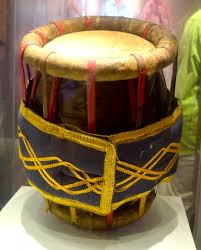
Thavil
The Thavil is a powerful double-headed percussion instrument widely used in Tamil Nadu’s temple, folk, and Carnatic music traditions. It has a cylindrical wooden body, usually made from jackwood, with both sides covered in animal skin. The right head produces sharp, high-pitched sounds when played with a short stick, while the left side gives deep bass tones struck with the fingers. The player ties the drum around the waist or hangs it with a cloth strap for mobility. It is often paired with the Nadaswaram, together creating the grand and festive sound typical of South Indian ceremonies. The Thavil requires great stamina and coordination, as it involves both strength and precision in rapid rhythmic patterns. Its beats set the pace for religious processions, weddings, and temple rituals. The instrument’s dynamic sound captures both devotion and celebration, resonating through the atmosphere with energy. Over centuries, the Thavil has become a symbol of South Indian cultural heritage, representing rhythm, reverence, and festivity.