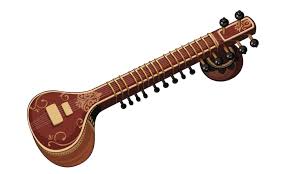
Sitar
The sitar is a long-necked plucked string instrument that originated in North India and has become famous worldwide for its enchanting sound. It typically has 18 to 21 strings, including melody, drone, and sympathetic strings that vibrate to create a shimmering resonance. The instrument’s fretted neck allows intricate note patterns and slides, bringing out the beauty of Indian ragas. Crafted from teak or tun wood with a large gourd resonator, the sitar produces deep, metallic tones full of richness and sustain. It is played using a wire plectrum called a mizrab worn on the finger, giving precise control over each note. The sitar gained international fame through maestros like Ravi Shankar, who introduced it to global audiences. Its sound is spiritual and meditative, capable of evoking both joy and serenity. The rhythmic patterns and melodic improvisations make it an essential part of Hindustani classical concerts. With its elegance, complexity, and distinctive timbre, the sitar remains a timeless emblem of India’s musical heritage.