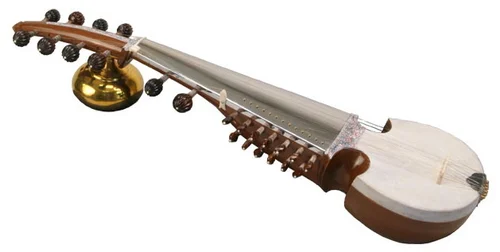
sarod
The sarod is one of the most expressive instruments in Hindustani classical music, admired for its rich and introspective sound. It has a fretless metal fingerboard that allows smooth glides, or meends, across notes, creating emotional depth in every phrase. Typically carved from teakwood or tun wood, the sarod features a resonating skin-covered body that enhances its tonal warmth. It has between 17 and 25 strings—four to six main strings, drone strings, and sympathetic strings that add shimmering overtones. The sarod is played with a plectrum called a java, producing crisp yet resonant tones. Its sound blends strength and sensitivity, reflecting both rhythm and melody with balance. Renowned maestros like Ustad Amjad Ali Khan have elevated the sarod to international recognition. The instrument’s tone can shift from soft whispers to bold, powerful expressions within seconds. Its deep and meditative character makes it a favorite for portraying emotion and spirituality in Indian classical performances. The sarod remains a symbol of grace, discipline, and profound musical artistry.