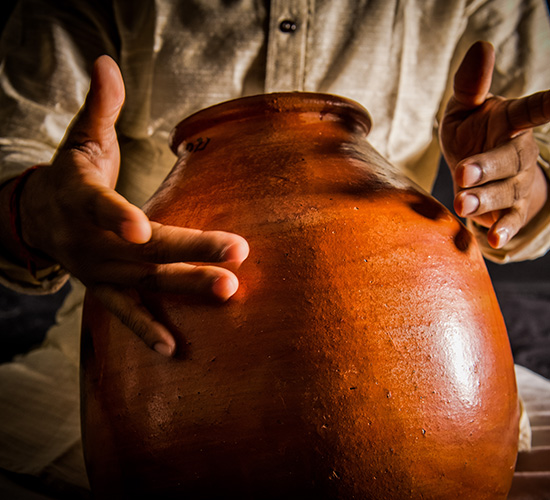
Ghatam
The Ghatam is one of the most unique percussion instruments in Indian classical music, particularly in the Carnatic tradition. Made from specially baked clay mixed with metal filings like copper or brass, it creates a distinct, resonant tone. The instrument has no tuning parts—its pitch depends on the thickness and size of the pot. The musician holds the Ghatam against the stomach, striking different areas of the pot with fingers, thumbs, palms, and even nails to produce a variety of sounds. Subtle hand movements and pressure changes help control the pitch and resonance. Despite its simple appearance, the Ghatam requires exceptional skill and rhythmic precision to master. It often accompanies instruments like the Mridangam and Kanjira, adding sharp, rhythmic accents to performances. The sound can range from soft and melodic to sharp and percussive, making it highly dynamic. Its earthy tone and natural resonance connect deeply with traditional South Indian music. As both a solo and ensemble instrument, the Ghatam showcases how simplicity can produce stunning musical complexity.